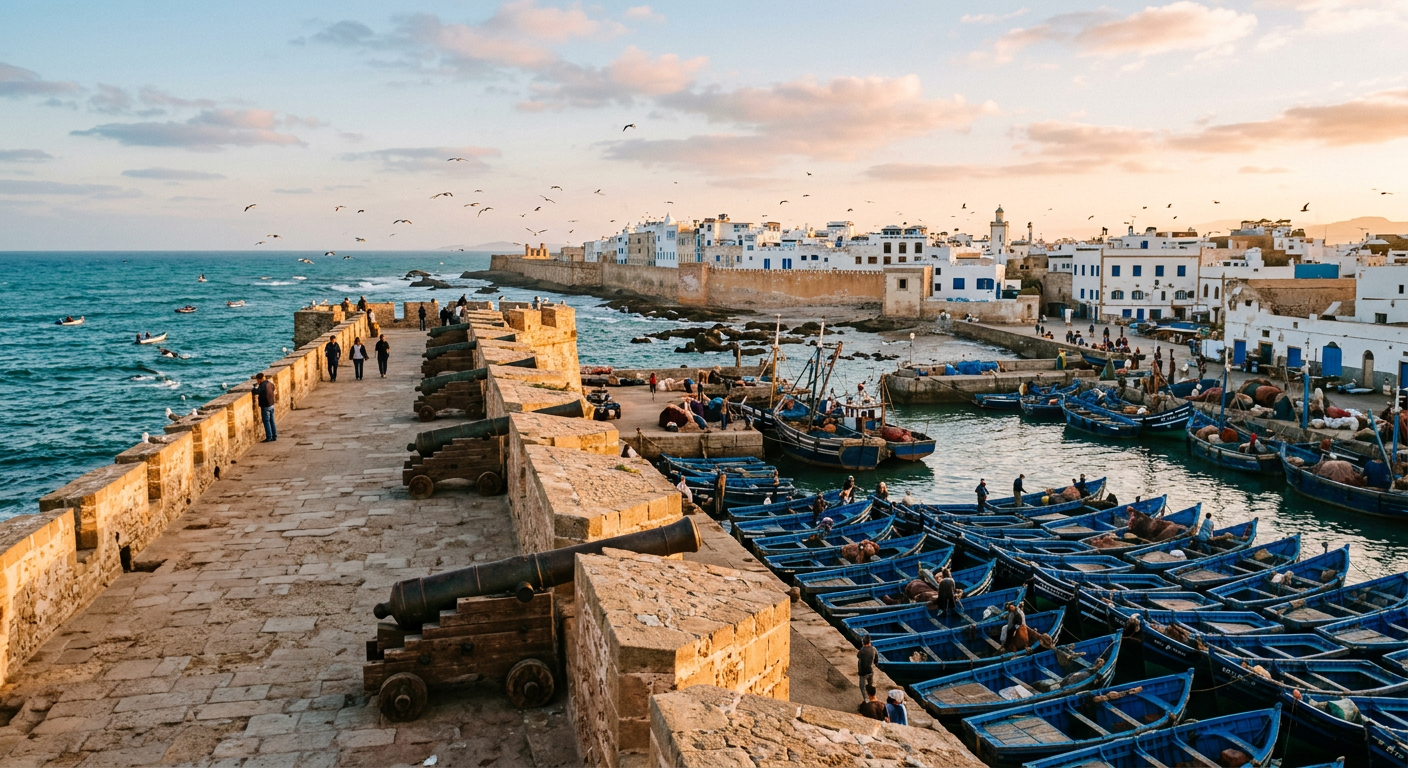
Casablanca-Settat
Casablanca
Morocco's economic capital on the Atlantic.
Casablanca at a glance
- Region
- Casablanca-Settat
- Province or prefecture
- Casablanca (prefecture)
- Status
- Regional capital
- Population
- 3,359,818 (2014 census)
- Area
- Not available
- Elevation
- 27 m
- Coordinates
- 33.573, -7.590
- Postal code
- 20000
- Phone area code
- +212 522
- Time zone
- Africa/Casablanca (see note on Ramadan)
- Local names
- Casablanca (French) · الدار البيضاء (Arabic)
- Best time to visit
- April to June and September to October
Population is from the 2014 census (HCP) and is being updated. Climate figures are indicative regional profiles. Confirm details with official sources before relying on them.
About Casablanca
Casablanca is Morocco's largest city, its main port and its business hub. Visitors come for the monumental Hassan II Mosque, Art Deco architecture downtown and the lively Atlantic corniche.
History
An Amazigh settlement known as Anfa stood here before the Portuguese built a fort in the 16th century. Sultan Sidi Mohammed ben Abdallah rebuilt the town in the late 18th century, and it grew rapidly into a major port and industrial city under the French protectorate from 1912.
Things to see in Casablanca
- Hassan II Mosque
- Art Deco downtown and Mohammed V Square
- Habous quarter
- Ain Diab corniche
- Old medina
Climate and best time to visit
Atlantic temperate. Mild, humid Atlantic climate with warm summers tempered by sea breezes and rain concentrated between October and April.
Best time to visit: April to June and September to October. Indicative regional profile.
Getting to Casablanca
- By air
- Mohammed V International Airport (CMN), about 30 km south of the city.
- By train
- Casa-Voyageurs and Casa-Port stations; Al Boraq high-speed trains run north to Rabat and Tangier.
- By bus
- CTM, Supratours and regional bus companies serve most routes; grand taxis cover shorter hops. Check current schedules.
- By road
- Reached by national roads and, on many routes, the motorway network. Check road conditions in winter, especially in mountain areas.
Economy
Finance, industry, logistics, aerospace and retail concentrate here, along with the country's busiest port and airport.
Food and drink
Fresh seafood, grilled fish at the port and a wide range of street food and cafes.
Festivals and events
Music, film and art events run through the year; check local listings for current dates.
Where to stay
Casablanca has a full range of accommodation, from international hotels to guesthouses and, in historic quarters, traditional riads and dars. Staying inside or near the old town makes it easier to explore on foot.